Short answer
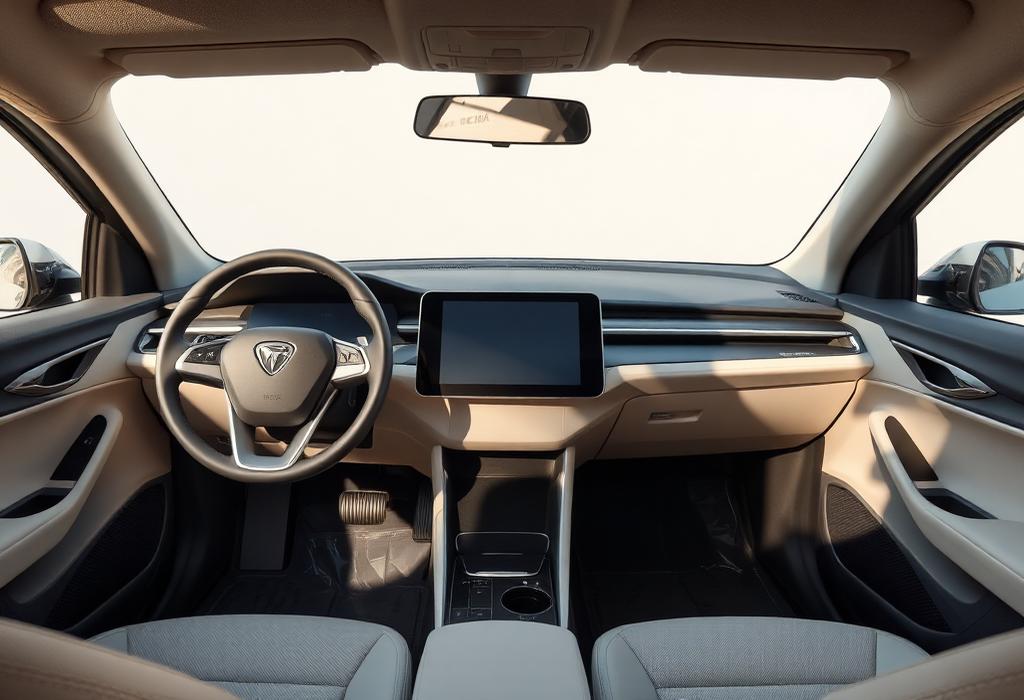
For a Tesla Model Y, the accessories worth buying first are the ones that protect an expensive surface, remove a daily task or stop loose items moving: all-weather floor and cargo liners, centre-screen protection, a console organiser, and tidy charging storage.
Fitment, not brand, decides whether a part works. The 2025-2026 Juniper refresh changed interior and exterior shapes, so a set cut for an earlier Model Y is not automatically correct for a Juniper car.
Every product linked from this guide carries a stored compatibility record listing the Model Y years and variants it covers. Check that record, then confirm the same details on the retailer listing before ordering.
Fitment snapshot
- Vehicle
- Tesla Model Y
- Generation split
- Pre-refresh Model Y and the 2025-2026 Juniper refresh are treated as separate fitment targets.
- Most fitment-sensitive categories
- Floor and cargo liners, console organisers, mud flaps, roof and windscreen shades.
- Source of fitment claims
- Compatibility records stored with each product in the EV Gear Lab catalogue.
What to check before buying
- Confirm whether your car is a Juniper (2025-2026) or an earlier Model Y before ordering shaped parts.
- Check the seat layout: five-seat and seven-seat cars need different second and third-row coverage.
- For liner sets, check which areas are included — footwells only, or footwells plus boot, frunk and sub-trunk.
- For screen and roof accessories, match the display size or glass area rather than the model name.
- Price, stock and current listing details live on Amazon; EV Gear Lab does not publish prices.
Last reviewed by EV Gear Lab on September 18, 2026. Fitment statements come from the compatibility records stored for each product; assessments are EV Gear Lab editorial judgement and are kept separate from manufacturer and marketplace listing claims.
A Model Y arrives with very few places to put things and a great many surfaces that show wear. That combination is why accessory buying starts early, and also why so many of those purchases are wrong: the car creates an obvious problem, and the first product that appears to solve it gets ordered.
This guide treats the accessory question as a sequence rather than a shopping list. It sets out which four jobs are actually worth spending on, how to tell a well-made part from a poorly shaped one, which fitment details decide whether an item fits your specific car, and where the money usually goes to waste.
A simple rule for deciding what to buy
Before comparing products, it helps to filter categories. An accessory is worth buying when it protects a surface that is expensive to restore, removes a task you repeat every day, or prevents something loose from moving around the cabin. If a candidate does none of those three things, it is decoration, and decoration can wait.
Applied honestly, that filter reduces the field to four areas: protection, organisation, charging and cabin care. One considered item in each tends to be enough for a long time.
- Protection — floor mats, screen protection and splash guards take the wear instead of the carpet, glass and paint.
- Organisation — console, frunk and trunk inserts give deep, undivided wells a defined shape.
- Charging — tidy cable storage at home and a stable phone charging point in the cabin.
- Cabin care — the piano-black trim and the display mark first, so cloths matter more than polish.
How to tell a well-made part from a poor one
Fit quality separates accessories that stay in the car from accessories that end up in a garage drawer. A part that is a few millimetres out will rattle on rough surfaces, shift under load, or refuse to sit flush against the trim beside it. Photographs rarely reveal this; product descriptions sometimes do, when they specify the vehicle revision rather than the model name alone.
Material is the second tell. Matte and soft-touch finishes sit quietly next to the factory trim and hide fingerprints; hard gloss plastics squeak against console walls and catch the light in a way the cabin does not. Anything that lives in a footwell or a cargo well should be washable, not merely wipeable.
- Shaped or laser-measured for the specific vehicle, wherever exact fit is the point of the part.
- Removable for cleaning without tools.
- No-drill fixing for exterior parts, unless you are comfortable with body fixings.
- Folds flat, in the case of cargo organisers — the ones that do not fold live in the garage.
Fitment checkpoints before you order
Model Y interiors have changed across production years and between markets. Console layouts, trim finishes, seat configurations and display dimensions are the usual points of variation, and a part cut for one revision can be visibly wrong on another.
Seat count is an easy detail to overlook. A seven-seat car has a different rear floor and cargo area, so rear mats, trunk inserts and cargo covers should not be assumed interchangeable with the five-seat versions.
- Model year — console shape, port positions and trim details differ between revisions.
- Seat configuration — five-seat and seven-seat cars need different rear mats and trunk inserts.
- Display size and bezel shape — a protector cut for another screen will not sit flat.
- Market — left- and right-hand-drive cars have mirrored footwells and different pedal cut-outs.
Features that actually change daily use
- Raised mat edges, which contain water instead of letting it run onto the carpet.
- Anti-slip backing or factory retention points, so a mat cannot creep towards the pedals.
- Defined compartments in organisers rather than one deep open box.
- A rigid base panel in cargo boxes, so the box keeps its shape when loaded.
- Matte or anti-glare screen protection, which is most noticeable on low winter sun.
- Cable storage that supports both the connector and the coil, not just the plug head.
Related accessories
Where the money tends to go to waste
- Ordering a complete accessory bundle in delivery week, before any real habit has formed.
- Buying by model name alone, with no check of model year or seat layout.
- Choosing carpet mats for a car that regularly meets rain, snow or gravel.
- Fitting a phone mount bulky enough to intrude on the display or the forward sight line.
- Cleaning the centre display with household glass cleaner rather than a screen-safe cloth.
- Leaving the frunk undivided and then repacking groceries after every corner.
When you may not need an accessory at all
Some categories are widely sold and narrowly useful. A car kept in a garage and driven on clean roads gains little from splash guards. A single-occupant commuter rarely needs rear-seat organisers. Wireless charging is redundant if a cable already lives in the console and your phone sits there anyway.
A practical way to avoid these purchases is to wait. Drive the car for a few weeks, note the moments that irritate you, and buy against that list rather than against a category page.
Shortlists by how the car is used
Use pattern predicts the right accessory set far better than trim level does.
- Daily commuter — floor mats, a console tray and an unobtrusive phone mount cover almost everything.
- Family car — trunk organisation and rear-row protection first, cabin cleaning supplies second.
- Wet or gravel roads — all-weather mats and splash guards do the most for paint and carpet.
- Street parking — recording storage and a stable cabin power source come before comfort items.
- Frequent road trips — charging cable management, frunk storage and passenger charging.
Related accessories
Conclusion
The useful Model Y accessory set is short: protect what is costly to restore, give loose items a defined home, tidy the charging cable, and keep a screen-safe cloth in the car.
Buy in that order, check each item against your model year and seat layout, and the total spend usually ends up lower than a single bundle bought on delivery day.
Frequently asked questions
Which Model Y accessory should be bought first?
Floor and cargo protection, because carpet is the surface that wears fastest and is hardest to restore. Screen protection and console organisation usually follow.
Do earlier Model Y accessories fit the 2025-2026 Juniper?
Not automatically. Some records cover a wide Model Y year range, others are cut for the refreshed car only. Use the year range on the product page rather than the model name.
Does EV Gear Lab sell Model Y accessories?
No. EV Gear Lab is an independent research and buying guide; purchase links go to Amazon, where the sale is completed.
How EV Gear Lab works: we research Tesla and EV accessories, record the fitment each product states, and publish our own assessment of how useful it is. Fitment and specification statements come from the product's stored record and the manufacturer listing; the buying judgement is EV Gear Lab editorial opinion. We do not sell these products — purchase links go to Amazon.
More guides
- Best Tesla Accessories for Model 3 & Model Y
- Tesla Model Y Juniper Accessories Worth Buying First
- Best Floor Mats for Tesla Model Y: How to Choose
- Tesla Model 3 Accessories Worth Buying First
- Tesla Charging at Home: Cables, Holders and Setup
- Tesla Dashcam and Sentry Mode Storage Explained
- Tesla Winter Driving: Protection and Cabin Gear
- Tesla Interior Organization: Console, Frunk and Trunk
- How to Check Tesla Accessory Fitment by Model and Year
- Tesla Road Trip Accessories: What to Pack and What to Skip
- Tesla Pet Travel Accessories: A Practical Guide for Dogs and Cats
- Tesla Model Y Adapter Guide: J1772, NACS & Charging Adapters
- 2026 Tesla Model 3 16-Inch Screen: Fitment Guide
- Tesla Model Y Cabin Air Filter: HEPA Replacement Guide
- Tesla Jack Pads and Lifting Pucks: Fitment and Safe Use
- Tesla Model Y Sunshade Guide: Windscreen and Glass Roof
- Tesla Model Y Mattress Guide: Camping and Sleeping Setup
- Tesla Model Y Fridge and Cooler Guide: Frunk, Console and Trunk
- Tesla USB Hub and Cabin Charging Guide: Model Y and Model 3
- Tesla Model S and Model X Accessories: Protection and Shading
- Tesla Cybertruck Bed Mat Guide: Protecting the Vault
- Tesla Model 3 Highland Floor Mats and Interior Protection