Short answer
A Cybertruck bed mat is a shaped rubber or TPE liner that sits in the cargo bed to absorb impact, stop cargo sliding and keep the bed surface clean.
The two designs in this catalogue differ in coverage: a full-length 6 ft floor mat, and a mat with a corrugated front wall section that also protects the bulkhead.
Both are recorded as compatible with the Cybertruck. Beyond that, the choice is about how you load the truck, not about fitment.
Fitment snapshot
- Vehicle
- Tesla Cybertruck
- Bed length
- The full-length mat in this catalogue is listed at 6 ft
- Coverage difference
- Floor only, versus floor plus a corrugated front wall section
- Fitment status
- Both recorded as compatible with the Cybertruck bed
What to check before buying
- Decide whether you need the front bulkhead protected as well as the floor.
- Check the mat sits below the tailgate line so the tailgate closes without fouling.
- Consider drainage: a mat that traps water against the bed is worse than no mat.
- Think about weight — thicker mats protect better and are harder to remove for cleaning.
- Confirm the mat does not obstruct the bed's own tie-down or accessory points.
- Price and stock live on Amazon. EV Gear Lab does not publish prices or ratings.
Last reviewed by EV Gear Lab on September 23, 2026. Fitment statements come from the compatibility records stored for each product; assessments are EV Gear Lab editorial judgement and are kept separate from manufacturer and marketplace listing claims.
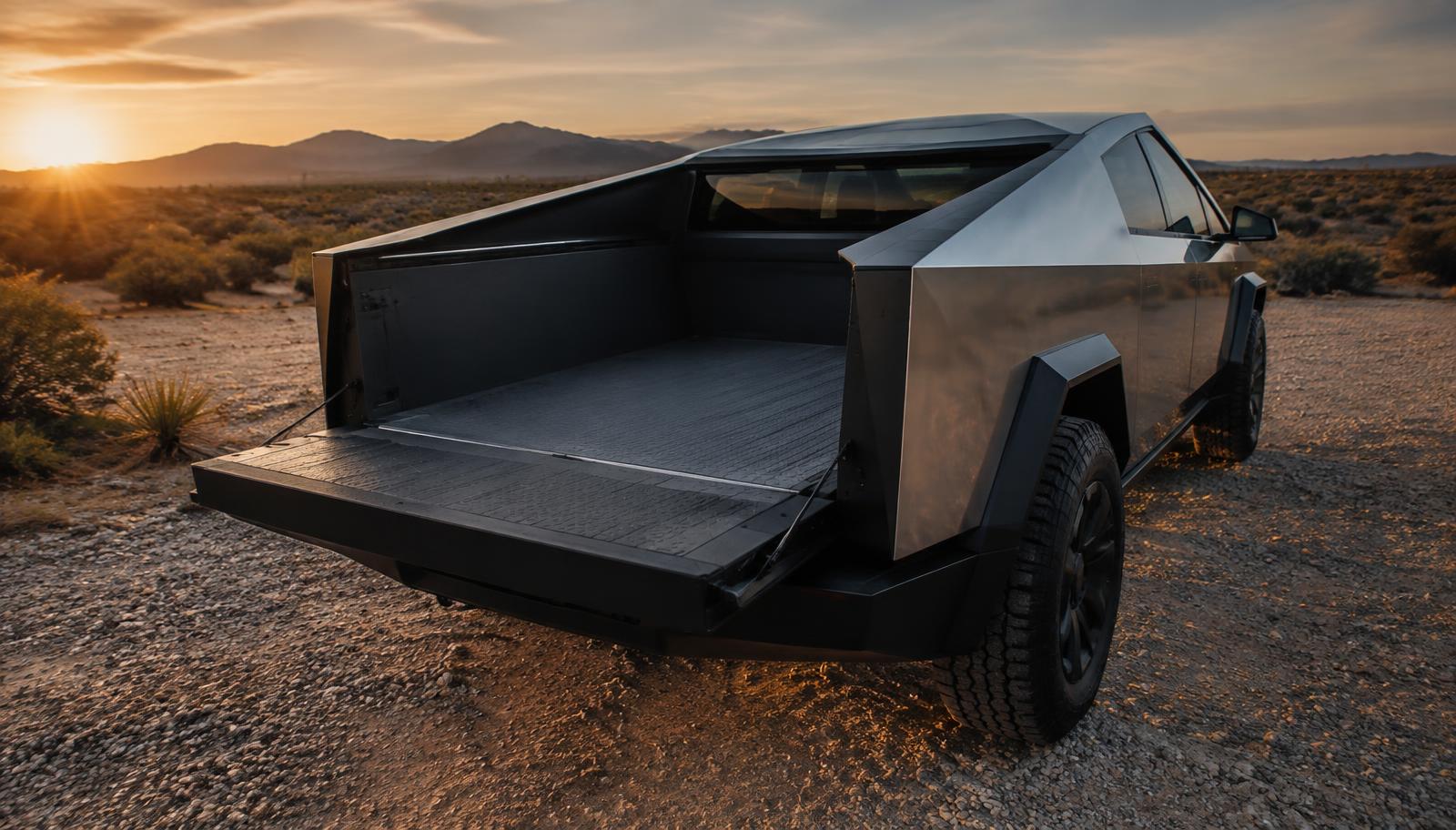
The Cybertruck's bed is its most distinctive functional feature and the part most likely to show the consequences of actually using the truck. It is a large, open, hard-surfaced space, and everything you put in it arrives with grit on it.
Bed mats are the low-effort answer. They are among the few Cybertruck accessories that require no fixing, no wiring and no compromise: the mat goes in, the bed keeps working as before, and the surface underneath stops taking the punishment directly.
This guide covers what the two available designs actually differ on, the drainage and clearance details worth checking, and how to think about the mat as part of how you load rather than as a cosmetic addition.
What a bed mat is protecting against
Three separate things damage a truck bed, and a mat addresses them differently. Point impacts from dropped tools or gravel-laden loads are absorbed by thickness. Abrasion from cargo sliding is reduced by grip. Staining and residue from spilled liquids are handled by having a removable surface between the spill and the bed.
A mat is best understood as a consumable that takes damage instead of the truck. That framing makes the thickness decision straightforward: thicker mats absorb more and last longer, at the cost of weight and the effort of getting them in and out.
It also sets expectations correctly. A bed mat is not a bed liner in the spray-on sense. It protects the floor, and in one of the designs here the front wall, but it does not wrap the bed sides.
- Impact absorption scales with thickness.
- Sliding is reduced by surface texture, not eliminated.
- Spills are contained above the bed rather than on it.
- Sides remain unprotected unless you add separate side protection.
Floor only, or floor plus front wall
The LASFIT mat in this catalogue is a premium extra-thick 6 ft bed mat covering the bed floor. It is the straightforward choice: maximum floor coverage, nothing complicated about fitting it, and the whole loading surface protected.
The TripleAliners mat adds a corrugated front wall section. That matters if your loading habit is to slide long items — timber, ladders, bikes — forward until they stop against the bulkhead, because the bulkhead is where the concentrated impact lands and where an unprotected bed scuffs first.
Neither design is better in the abstract. The question is whether the front wall is a surface your cargo actually touches. For owners hauling loose material or boxes that stay put, floor coverage is sufficient; for owners loading long items single-handed, the front section earns itself.
Cybertruck bed mats in this catalogue
Fitting, drainage and clearance
Fitting a bed mat is a two-minute job with no tools, which is precisely why the details worth checking are the ones that only appear afterwards.
The first is the tailgate. A mat that rides up at the rear edge, or that is slightly too long, will foul the tailgate as it closes. Lay the mat with the tailgate down, then close it and check for contact before loading anything.
The second is water. Beds are washed, and rain arrives whether or not the cover is closed. A mat lying flat over the bed floor can hold water beneath it, and trapped moisture under a mat is a slower, quieter problem than a visible puddle. Lifting the mat occasionally, especially after washing, is the habit that avoids it.
The third is the bed's own hardware. Tie-down points and accessory mounting locations need to remain usable, so check that the mat's cut-outs — or its edges — leave them accessible rather than covered.
Related Tesla models
Related guides
Common mistakes
- Choosing a mat on thickness alone without deciding whether the front wall needs covering.
- Fitting the mat and never lifting it, so grit and water sit underneath indefinitely.
- Assuming a grippy surface removes the need to strap a load down.
- Covering tie-down or accessory points that you later need.
- Not checking tailgate clearance before the first real load.
- Expecting a floor mat to protect the bed sides, which it does not.
Conclusion
A bed mat is the cheapest way to keep a Cybertruck bed looking like the day it arrived, and the decision is unusually simple: full floor coverage, or floor plus the front wall your cargo slides into.
Check tailgate clearance on the first fit, keep the tie-down points accessible, and lift the mat occasionally so nothing sits trapped beneath it. Beyond that, it is the rare accessory that asks nothing further of the owner.
Frequently asked questions
Does a Cybertruck need a bed mat?
It is not required, but the bed is the part of the truck that meets everything abrasive you carry. A mat takes the point loads from tools, bikes and building materials, and it stops smooth cargo sliding on every corner, which is the reason most owners fit one early.
What is the difference between the two mats here?
One is a full-length 6 ft floor mat covering the bed floor. The other adds a corrugated front wall section, so the bulkhead at the front of the bed is protected as well as the floor. If you regularly slide long items forward until they hit the front wall, that extra section is doing real work.
Will a bed mat stop cargo sliding?
A textured rubber or TPE surface has considerably more grip than a bare bed, which reduces movement. It is not a substitute for strapping a load down, and nothing in this guide should be read as saying otherwise.
Does water drain with a mat fitted?
It depends on the mat's underside and how it sits relative to the bed's drainage. A mat that lies completely flat against the floor can trap water beneath it, which is why owners who wash the bed regularly tend to lift the mat out periodically rather than leaving it permanently in place.
Can I leave the mat in permanently?
Most owners do. The practical caveat is cleaning: grit that works its way under a mat stays there, so occasional removal is sensible even if the mat itself never needs to come out for loading.
Do bed mats interfere with the tonneau cover?
A bed floor mat sits low enough that it should not, but a mat with a raised front wall section occupies vertical space at the bulkhead. Check the stated thickness against the clearance you have if you use the powered cover with tall cargo.
How EV Gear Lab works: we research Tesla and EV accessories, record the fitment each product states, and publish our own assessment of how useful it is. Fitment and specification statements come from the product's stored record and the manufacturer listing; the buying judgement is EV Gear Lab editorial opinion. We do not sell these products — purchase links go to Amazon.
More guides
- Best Tesla Accessories for Model 3 & Model Y
- Tesla Model Y Juniper Accessories Worth Buying First
- Tesla Model Y Accessories: The Complete Buyer's Guide
- Best Floor Mats for Tesla Model Y: How to Choose
- Tesla Model 3 Accessories Worth Buying First
- Tesla Charging at Home: Cables, Holders and Setup
- Tesla Dashcam and Sentry Mode Storage Explained
- Tesla Winter Driving: Protection and Cabin Gear
- Tesla Interior Organization: Console, Frunk and Trunk
- How to Check Tesla Accessory Fitment by Model and Year
- Tesla Road Trip Accessories: What to Pack and What to Skip
- Tesla Pet Travel Accessories: A Practical Guide for Dogs and Cats
- Tesla Model Y Adapter Guide: J1772, NACS & Charging Adapters
- 2026 Tesla Model 3 16-Inch Screen: Fitment Guide
- Tesla Model Y Cabin Air Filter: HEPA Replacement Guide
- Tesla Jack Pads and Lifting Pucks: Fitment and Safe Use
- Tesla Model Y Sunshade Guide: Windscreen and Glass Roof
- Tesla Model Y Mattress Guide: Camping and Sleeping Setup
- Tesla Model Y Fridge and Cooler Guide: Frunk, Console and Trunk
- Tesla USB Hub and Cabin Charging Guide: Model Y and Model 3
- Tesla Model S and Model X Accessories: Protection and Shading
- Tesla Model 3 Highland Floor Mats and Interior Protection