Travelling with an animal changes the accessory question in a way that ordinary packing does not. A passenger adjusts to the car; a dog or a cat does not, so the cabin has to absorb hair, claws, moisture and movement, and it has to be cleanable afterwards. That is a different problem from carrying luggage, and it is why a pet setup is worth thinking through separately rather than folding into a general travel list.
The approach here starts with the animal and the journey rather than with a product category. A cat carried twice a year to a veterinary appointment and a large dog collected from a muddy field every weekend both count as pet travel, but almost nothing they need overlaps. This guide works through the categories that may genuinely earn a place, what to check before ordering any of them for your exact car, and the situations where the honest answer is that nothing needs buying.
Start with the pet, the car and the travel pattern
Three variables decide most of the setup: what the animal is, where it will travel inside the vehicle, and how often. Answering them first prevents the common outcome of buying a large, semi-permanent accessory for a journey that happens four times a year.
Vehicle configuration matters as much as the animal. Interior dimensions, seat layout, cargo floor shape and folding behaviour vary by model, model year, seat count and market, so where a carrier or a cover can sit is a question about your exact car rather than about Teslas in general. Anything sold by model name alone should be checked against the specific vehicle before ordering.
- Size and number of animals — one small dog, a large dog, two animals travelling together and a single cat in a carrier all imply different space and containment needs.
- Carrier or loose — a cat is commonly transported in a carrier, which turns the question into placement and stability rather than surface protection.
- Travel frequency — occasional trips favour removable items; frequent travel may justify something that stays in place.
- Trip length — short local runs and long journeys differ mainly in water, food and break-time logistics.
- Where the animal travels — rear seat and cargo area create different protection, access and separation problems.
- Who else travels — a rear bench shared with children rules out setups that block seating or belts.
Related guides
Seat protection: covers, hammocks and liners
This is the category most owners consider first, and the reasoning is straightforward: upholstery is expensive to restore, and claws, damp fur and dirt all reach it. A cover is intended to take that contact instead, and to be removable so the mess leaves the car with it.
The practical distinction is between a flat cover, which lies over the seat surface, and a hammock-style cover, which is suspended between front and rear headrests so it also shields the seat backs and the footwell gap. A hammock may suit a dog that moves around; a flat cover or liner is simpler where the animal stays on one seat or sits inside a carrier. A cargo-area liner is a separate item again, shaped for the boot floor rather than the seats.
- Problem it solves — hair, claw marks, damp and dirt reaching upholstery, and the cleaning time that follows.
- Who may benefit — owners carrying a loose dog regularly, particularly after walks in wet or muddy conditions.
- What to check — coverage for your seat shape, how it anchors, whether it can be removed without tools, and whether the material is washable rather than only wipeable.
- Access details — where a rear seat still has to carry people, check how the cover interacts with seat belts, child-seat anchor points and the centre armrest for your specific seat layout, and follow the manufacturer's instructions for anything routed near them.
- Trade-off — the more coverage a cover provides, the more it interferes with normal passenger use, and the longer it takes to fit and remove.
- When to skip — a cat in a closed carrier, or an animal that travels a few times a year, may be handled by a washable blanket already in the house.
Related accessories
Barriers and separation
A barrier or divider is intended to keep an animal in one part of the cabin, usually to stop a dog moving from the cargo area into the rear seats or forward towards the driver. Whether that is useful depends entirely on the animal's behaviour, not on the vehicle.
No claim should be made here about protection in a collision. A barrier is a separation aid; treat any safety-related statement as belonging to the manufacturer's own documentation for that exact product, and read it before buying. Where local rules on carrying animals in vehicles apply, they are worth checking too.
- Problem it solves — an animal that will not settle in one area, or that distracts the driver by moving forward.
- Who may benefit — owners of a larger dog travelling in the cargo area, particularly on longer journeys.
- What to check — how it mounts, whether mounting relies on pressure against trim, headrest posts or the folded seat backs, and whether it can be removed quickly when the space is needed for cargo.
- Visibility and access — a full-height divider affects the rear view and makes reaching the animal harder; a partial divider does less of both, in either direction.
- Trade-off — separation is bought with usable space, rear visibility and setup time.
- When to skip — an animal that already settles, a carrier-based setup, or a car where the rear seats are in daily use by passengers.
Carriers and travel crates
For a cat, and for some smaller dogs, the carrier is the setup, and everything else follows from where it can sit. The useful question is not which carrier is best in general but which one fits the space you intend to use and can be handled easily at both ends of the trip.
Measure before choosing. Rear footwell depth, bench width, cargo floor length and the height available under a parcel shelf or a sloping tailgate differ between models, model years and seat configurations, so compare the carrier's stated external dimensions against measurements taken from your own car rather than against photographs. Where a folded seat forms part of the platform, check whether the resulting surface is level for that configuration.
- Usable space — internal dimensions matter more than external bulk; a carrier the animal cannot turn around in is the wrong size regardless of how well it fits the car.
- Ventilation and outlook — openings on more than one side affect airflow and how much the animal can see, which some animals settle better with.
- Stability — whether the carrier slides on the surface it sits on, and what the manufacturer specifies about securing it; follow those instructions rather than improvising a fixing.
- Access — a top-opening carrier can be easier to load in a car with limited door aperture; a front-opening one is often easier at the destination.
- Cleaning — removable, washable bases save far more time than they cost in price.
- When to skip — a large dog that travels loose in a cargo area with a liner may need no carrier at all.
Harnesses, tethers and restraint-related products
This category needs the most care, because the products look similar and their claims do not. A walking lead is not a travel product. A travel harness is a harness intended to be worn in a vehicle. A tether is the connecting element between a harness and an anchor point in the car. They are frequently sold together and frequently confused.
EV Gear Lab does not make safety claims on behalf of these products. Whether a given harness or tether has been tested to any standard, and what any such test covers, is a statement only the manufacturer can make for that exact product. Read the manufacturer's instructions, check what anchor points they specify and what they explicitly exclude, and confirm those points exist in your car and seat configuration. Where a product's documentation is vague about how it should be attached, treat that as a reason to look elsewhere rather than to guess.
Guidance on transporting animals — including anything relating to an animal's health, behaviour or tolerance of travel — is a matter for a veterinary professional and for the applicable rules in your region. No accessory replaces that advice.
- Problem it may address — an animal moving around the cabin during a journey.
- What to check — the manufacturer's stated purpose, the attachment method, the anchor points named in the instructions, and the size range for the animal.
- What not to assume — that a lead clipped to something in the car is equivalent to a product designed for travel use.
- Trade-off — more restrictive setups are harder for the animal to tolerate on long trips and take longer to fit correctly each time.
- When to skip — where a carrier or crate is already being used as specified by its manufacturer.
Hair, mess and cleaning
Hair is the recurring cost of pet travel, and it is easier to contain than to remove. The realistic aim is to keep it on a surface that leaves the car, which is why removable liners, washable covers and mats do more useful work than any cleaning tool bought afterwards.
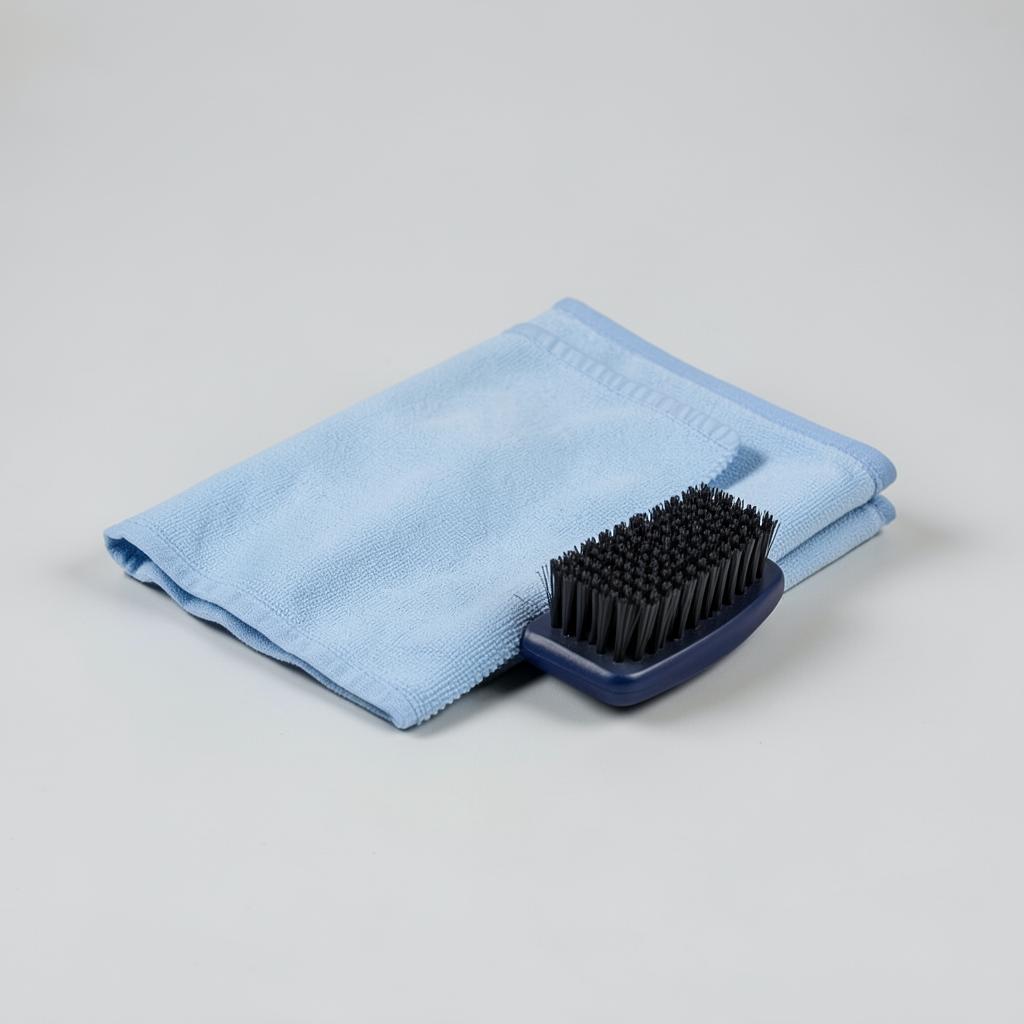
No cover keeps a cabin entirely free of hair. Fine hair migrates into seat seams, belt reels and air vents regardless of what is laid over the seat, and the honest framing is reduction rather than prevention. A small kit kept in the car — a cloth, a brush and a bag — usually removes more irritation than an additional accessory would.
- Removable liners and washable covers — the main defence, because they can be taken out and cleaned separately.
- Rubber or all-weather mats — easier to rinse than carpet after wet paws, where they suit your footwell shape.
- A simple brush or roller kept in the car — deals with hair before it is pressed into fabric by the next passenger.
- Screen and trim care — pet nose prints land on glass and gloss trim; use products intended for those surfaces rather than household cleaners.
- Somewhere to keep the kit — a small container in the boot or console stops the cleaning items becoming loose clutter.
Related accessories
Water, food and small items
On short journeys this section is usually unnecessary. On longer ones it becomes the difference between a calm break and a wet cargo floor. The items involved are small and cheap, and the main decision is where they live so they are not rolling around the boot.
Be sceptical of container claims. Descriptions such as spill-resistant vary widely in what they mean, and a bowl that behaves well on a flat surface may not on a moving one. Where a specification matters to you, read what the manufacturer actually states for that product rather than the marketing headline, and carry the container upright in something that holds it.
- A travel bowl that folds or collapses, so it stores flat rather than occupying a well permanently.
- Water carried in a sealed bottle and poured at the stop, which avoids relying on a container's behaviour in motion.
- Food and treats in a closed container, kept away from anything that absorbs odour.
- Waste bags stored somewhere fixed, since these are the item most often forgotten.
- A single small box or organiser for all of the above, rather than several loose items.
Related guides
What to skip
Pet accessories are marketed enthusiastically, and a large part of the category solves problems that a given owner does not have. Declining an item is a legitimate outcome and often the better one.
- Bulky multi-part systems bought for occasional travel — the setup time alone tends to end their use.
- A second organiser that duplicates storage the car already has, once the first one is in place.
- Anything that blocks a seat belt, an anchor point or a seat that passengers still use.
- Products whose listings describe fitment by model name only, with no reference to model year, seat count or market.
- Covers and liners that cannot be washed, since they become the thing that holds the smell.
- Accessories bought because they are branded for Tesla rather than because they fit your car and solve your problem.
- Additions bought before the first pet trip has happened, when the actual irritation is still unknown.
Building a simple setup, in order
The following sequence keeps the setup small. Each step is intended to be answerable before any product page is opened.
- Describe the animal — size, number, and whether a carrier is involved.
- Decide where it travels — rear seat, cargo area, or footwell, and whether that space is also used by passengers.
- Name the actual problem — hair, dirt, movement, containment or logistics. If none of them apply yet, stop here.
- Choose the simplest item that addresses that one problem, rather than a system that addresses several you do not have.
- Verify fitment against your exact vehicle — model, model year, seat configuration and market — using measurements rather than photographs.
- Check removal and cleaning before buying: how long it takes to fit, how it comes out, and whether it can be washed.
- Live with it for a few trips before adding anything else.
Short trips, frequent local travel and long journeys
The same animal can need different provisions depending on the journey. These are patterns rather than recommendations, and each still depends on the animal and the vehicle.
- Occasional short trips — a washable blanket or a simple cover, plus whatever the carrier arrangement requires, is often the whole setup.
- Frequent local travel — something that can stay in place between trips becomes worth the space, because fitting and removing a cover twice a week is what eventually stops it being used.
- Longer journeys — water, food and waste logistics matter more than protection, and break planning matters more than either.
- Cold or wet conditions — footwell and cargo protection carry more of the load, and drying time becomes part of the decision.
Pre-purchase checklist
- Does this address a problem that has actually occurred on a trip?
- Does the listing state compatibility by model year and seat configuration, not just model name?
- Do the stated dimensions match measurements taken from the exact car?
- Can it be fitted and removed without tools, and how long does that take?
- Can it be washed, and how long does it take to dry?
- Does it interfere with seat belts, anchor points, folding seats or passenger space?
- For restraint-related products, does the manufacturer clearly describe the intended use and attachment method?
- Is there a simpler item, or something already in the house, that would do the same job?
When you may not need anything at all
A short veterinary trip with a cat in an existing carrier rarely calls for a purchase. A dog that travels a handful of times a year on dry roads may be covered by a blanket and a rinse of the mats. A cargo area used with a liner that is already fitted may need nothing further at all.
The cases where buying is clearly justified tend to share a signal: the same irritation repeats on every trip, and a specific item would end it. Where that signal is absent, waiting costs nothing and usually reveals that the setup was adequate.
Protecting the seat backs
Dogs travelling in a footwell or on a rear seat spend most of the journey with their feet against the back of a front seat. That surface is upholstered, it is at exactly claw height, and it is one of the more expensive interior panels to put right.
A kick protector is a flat panel that covers the back of the front seat. It was designed for children's shoes and works just as well for paws, and unlike a full seat cover it does not change how the rear seat itself feels to sit on.
It is also the cheapest item in this guide by some margin, which makes it an easy addition alongside a cover or a hammock rather than an alternative to one.
Related accessories
Conclusion
Pet travel setups go wrong in the same way most accessory buying does — the product is chosen before the problem is described. Naming the animal, the space it travels in and the frequency of the trips answers most of the question, and what remains is usually one protective item and a small cleaning kit.
For anything that attaches to the car or to the animal, follow the manufacturer's own instructions and confirm fitment against your exact vehicle and configuration before ordering. Where transport arrangements raise questions about an animal's wellbeing, that is a conversation for a veterinary professional rather than a purchase decision.
More guides
- Best Tesla Accessories for Model 3 & Model Y
- Tesla Model Y Juniper Accessories Worth Buying First
- Tesla Model Y Accessories: The Complete Buyer's Guide
- Best Floor Mats for Tesla Model Y: How to Choose
- Tesla Model 3 Accessories Worth Buying First
- Tesla Charging at Home: Cables, Holders and Setup
- Tesla Dashcam and Sentry Mode Storage Explained
- Tesla Winter Driving: Protection and Cabin Gear
- Tesla Interior Organization: Console, Frunk and Trunk
- How to Check Tesla Accessory Fitment by Model and Year
- Tesla Road Trip Accessories: What to Pack and What to Skip
- Tesla Model Y Adapter Guide: J1772, NACS & Charging Adapters
- 2026 Tesla Model 3 16-Inch Screen: Fitment Guide
- Tesla Model Y Cabin Air Filter: HEPA Replacement Guide
- Tesla Jack Pads and Lifting Pucks: Fitment and Safe Use
- Tesla Model Y Sunshade Guide: Windscreen and Glass Roof
- Tesla Model Y Mattress Guide: Camping and Sleeping Setup
- Tesla Model Y Fridge and Cooler Guide: Frunk, Console and Trunk
- Tesla USB Hub and Cabin Charging Guide: Model Y and Model 3
- Tesla Model S and Model X Accessories: Protection and Shading
- Tesla Cybertruck Bed Mat Guide: Protecting the Vault
- Tesla Model 3 Highland Floor Mats and Interior Protection